

guide roller
Guide Roller: A Comprehensive Overview (Updated 03/24/2026)

Guide rollers are essential components across diverse industries, facilitating smooth motion and load support in applications ranging from conveyors to roofing systems.

Guide rollers represent a fundamental element in mechanical systems, playing a crucial role in controlling movement and managing loads across a vast spectrum of applications. These seemingly simple components are, in reality, engineered solutions designed for precision and durability. Their importance stems from their ability to minimize friction, maintain alignment, and distribute forces effectively.
From the intricate workings of machine tool spindles demanding super precision bearings to the robust demands of soil compaction rollers in construction, guide rollers adapt to diverse operational environments. Understanding their core functions and the various types available – including tapered roller bearings and thrust bearings – is paramount for optimizing system performance and ensuring longevity. This overview will delve into the world of guide rollers, exploring their applications, types, and essential maintenance practices.
What is a Guide Roller?

A guide roller is fundamentally a rotating component designed to constrain or direct the motion of another object, typically a belt, chain, or another roller. They aren’t simply wheels; they are precision-engineered elements often incorporating specific roller bearings – such as super precision & spindle bearings – to ensure smooth, efficient operation.
These rollers manage both radial and axial loads, with tapered roller bearings being particularly adept at handling combined forces. In applications like conveyor systems, they act as idler rollers, supporting the belt and preventing sagging. Beyond conveyors, guide rollers are integral to processes like roof coating, where specialized rollers ensure even application of materials. Their design and material selection are dictated by the specific application’s demands, prioritizing factors like load capacity, speed, and environmental conditions.
Core Functions and Applications
The primary function of a guide roller is to maintain directional control and reduce friction during movement. In conveyor systems, idler rollers support the load and facilitate smooth material transport, with tapered idlers specifically designed for navigating curves and minimizing belt wear.
Beyond conveyance, guide rollers play a crucial role in construction & roadwork, particularly in soil compaction rollers, where smooth-wheel or sheep-foot rollers are selected based on soil type. They are also vital in roofing applications, ensuring consistent coating thickness. The ability to customize these rollers – adjusting dimensions, materials, and coatings – allows for tailored solutions in demanding or specialized scenarios. Ultimately, guide rollers enhance efficiency, reduce operational costs, and improve the overall performance of various industrial processes.
Types of Guide Rollers
Guide rollers encompass diverse bearing types – including roller, super precision spindle, tapered, and thrust bearings – each optimized for specific load and speed requirements.
Roller Bearings: A Foundation
Roller bearings form the bedrock of many guide roller systems, providing robust support for both radial and axial loads. These bearings utilize cylindrical rollers, meticulously crafted to distribute weight evenly and minimize friction. Their design allows for high load-carrying capacity, making them ideal for demanding applications.
Within this category, variations exist to suit specific needs. Tapered roller bearings, for instance, feature rollers with differing diameters, enhancing their ability to handle combined loads. The selection of a specific roller bearing type hinges on factors like load magnitude, speed requirements, and the operational environment. High-quality roller bearings, often designated with ratings like ABEC-7 or ABEC-9, ensure smooth, cool operation even at elevated speeds, contributing to the overall efficiency and longevity of the guide roller assembly.
Super Precision & Spindle Bearings
Super precision and spindle bearings represent a pinnacle of bearing technology, crucial when exceptional accuracy and minimal runout are paramount in guide roller applications. These bearings are engineered for high-speed operation and are commonly found in machine tool spindles and other precision machinery. Their superior build quality, often reflected in ABEC-7 or ABEC-9 ratings, guarantees remarkably smooth and cool performance.

The internal geometry and tight tolerances of these bearings minimize vibration and noise, enhancing the precision of guided movements. While typically associated with machining, their benefits extend to guide roller systems where exacting control is necessary. Selecting these bearings increases system responsiveness and overall operational fidelity, despite a potentially higher initial investment.
Tapered Roller Bearings
Tapered roller bearings offer a unique capability within guide roller systems: the ability to simultaneously handle both radial and axial loads. This is achieved through their distinct design, utilizing rollers with varying diameters at each end. This configuration allows for efficient load distribution, making them ideal for applications experiencing combined forces, such as those found in heavy-duty conveyor systems or machinery requiring precise angular positioning.
The tapered design also allows for adjustment to optimize preload, enhancing rigidity and minimizing play. While potentially more complex to install than some bearing types, the benefits of increased load capacity and versatility often outweigh the added effort. Their robust construction ensures durability and reliability in demanding guide roller applications.
Thrust Bearings: Axial Load Support
Thrust bearings are specifically engineered to manage axial loads – forces acting parallel to the shaft – a critical function in certain guide roller applications. Unlike bearings primarily designed for radial loads, thrust bearings excel at supporting weight and preventing movement along the axis. Several types exist, including tapered, cylindrical, spherical, needle roller, and even fluid-film and magnetic variations, each suited to different load magnitudes and operational conditions.
Within guide roller systems, these bearings are vital where vertical loads or forces generated by belt tension are significant. Selecting the appropriate thrust bearing type depends on factors like speed, load capacity, and the presence of any radial forces. Proper selection ensures smooth operation and extends the lifespan of the guide roller assembly, preventing premature failure due to axial stress.

Guide Rollers in Specific Industries

Guide rollers demonstrate versatility across sectors like conveyor systems, construction, and roofing, adapting to unique demands with specialized designs and materials.
Conveyor Systems: Idler Roller Types
Idler rollers are fundamental to efficient conveyor system operation, significantly reducing friction and supporting belt load distribution. These rollers, a type of guide roller, come in various configurations tailored to specific application needs. Crucially, many demanding or specialized conveyor applications benefit from custom idler rollers, offering solutions precisely matched to unique operational requirements.
Customization extends to dimensions, materials – ensuring compatibility with conveyed materials – surface coatings for wear resistance, and specialized functions; A key design consideration involves tapered idlers, specifically engineered for curved conveyor sections. These expertly guide belts around bends, minimizing edge wear, a common issue in systems like airport baggage handling where continuous, reliable operation is paramount. Selecting the correct idler type directly impacts system longevity and performance, optimizing material flow and minimizing downtime.
Tapered Idlers for Curved Conveyors
Tapered idlers, a specialized subset of guide rollers, are specifically designed to manage the unique challenges presented by curved conveyor systems. Their conical shape is not arbitrary; it’s a crucial element in guiding the conveyor belt smoothly around bends, preventing misalignment and reducing the risk of material spillage. This design actively minimizes edge wear, a frequent problem in standard roller setups navigating curves.
The strategic implementation of tapered idlers ensures consistent belt tracking, maintaining optimal alignment throughout the curve. This is particularly vital in high-throughput applications, such as airport baggage handling systems, where continuous and reliable operation is non-negotiable. Properly installed tapered idlers contribute significantly to extended belt life and reduced maintenance requirements, ultimately lowering operational costs and maximizing system efficiency. They represent a targeted solution for a specific conveyor challenge.
Customizable Idler Roller Solutions
Many conveyor applications demand more than off-the-shelf components; they require idler rollers – and by extension, guide rollers – tailored to unique operational parameters. This is where customizable solutions become invaluable. Manufacturers now routinely offer a wide array of modifications, allowing for precise alignment with specific needs.
Customization extends to several key areas, including precise dimensional adjustments to fit existing infrastructure, selection of specialized materials for enhanced durability in harsh environments, and application of surface coatings to minimize friction or prevent material buildup. Beyond these, specialized functions can be integrated, such as built-in sensors for monitoring belt tension or automated lubrication systems. These bespoke guide roller solutions ensure optimal performance, increased efficiency, and prolonged system lifespan, addressing challenges standard rollers simply cannot overcome.
Construction & Roadwork: Soil Compaction Rollers
In the demanding fields of construction and roadwork, guide rollers manifest as robust soil compaction rollers, critical for achieving stable foundations. These rollers aren’t one-size-fits-all; their effectiveness hinges on selecting the appropriate type for the specific soil composition. Fine-grained soils like sand and clay necessitate different approaches than coarser materials.
Two primary designs dominate: smooth-wheel rollers, ideal for general compaction and finishing, and sheep-foot rollers, featuring protruding “feet” that penetrate and compact cohesive soils more effectively. The choice between static and vibratory rollers further refines the process, with vibration enhancing compaction speed and density. Careful consideration of these factors, guided by soil analysis, ensures optimal ground preparation for lasting infrastructure.
Smooth-Wheel vs. Sheep-Foot Rollers
Guide rollers utilized for soil compaction present two dominant configurations: smooth-wheel and sheep-foot rollers, each optimized for distinct soil types and project requirements. Smooth-wheel rollers excel at creating a uniform, finished surface, making them suitable for general compaction tasks and final grading on granular materials. They distribute weight evenly, providing consistent pressure across the working area.
Conversely, sheep-foot rollers, characterized by protruding “feet,” are designed for cohesive soils like clay. These feet penetrate the soil, kneading and compacting it from the bottom up, achieving higher densities. Selecting the correct roller is paramount; using a smooth-wheel roller on clay yields poor results, while a sheep-foot roller on granular soil is inefficient.
Roller Selection Based on Soil Type
Guide roller effectiveness in construction hinges on aligning roller type with the specific soil composition. Fine-grained soils, such as sand and clay, demand different approaches to achieve optimal compaction. Clay, being cohesive, benefits from the kneading action of sheep-foot rollers, which penetrate and densify from below. Conversely, granular soils like sand respond better to the consistent pressure of smooth-wheel rollers.
For asphalt paving projects, the choice between static and vibratory rollers becomes crucial. Vibratory rollers enhance compaction through impact, while static rollers rely solely on weight. Careful consideration of these factors ensures efficient and durable road construction. Incorrect selection leads to inadequate compaction, compromising structural integrity and longevity.

Guide Rollers in Roofing Applications
Guide rollers are vital for applying roof coatings, ensuring even distribution and adherence, with selection dependent on coating viscosity and type.
Roof Coating Roller Types
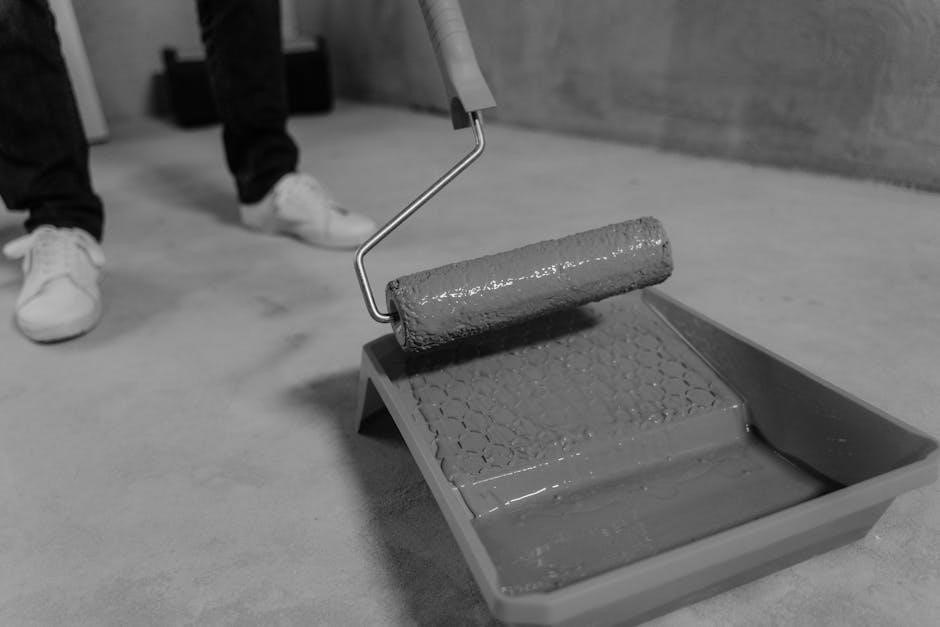
Guide rollers utilized in roofing applications encompass a variety of designs, each suited to specific coating materials and project demands. The selection process hinges on achieving optimal coating thickness and uniformity. Different roof coatings, ranging from elastomeric to acrylic, necessitate distinct roller characteristics for effective application.
Generally, rollers are categorized by their nap length and material composition. Shorter nap rollers are ideal for smooth surfaces and thinner coatings, minimizing texture while maximizing coverage. Conversely, longer nap rollers excel at applying thicker coatings and penetrating textured surfaces, ensuring complete encapsulation.
Roller covers can be constructed from various materials, including synthetic blends, woven fabrics, and specialized polymers, each offering unique resistance to solvents and wear. The appropriate roller type directly impacts the final coating quality, durability, and longevity of the roofing system. Careful consideration of these factors is paramount for successful roof coating projects.
Elastomeric Coating Roller Considerations
Guide rollers employed with elastomeric roof coatings demand specific attention due to the unique properties of these materials. Elastomeric coatings, known for their flexibility and waterproofing capabilities, require rollers that can maintain consistent film thickness without introducing excessive texture or air bubbles. Selecting the correct nap length is crucial; typically, a medium to high nap roller is preferred to adequately load the roller with the viscous coating.
The roller cover material must exhibit excellent resistance to the solvents present in elastomeric formulations, preventing swelling or degradation. Synthetic blends and specialized polymers are often favored over natural materials. Furthermore, the roller’s firmness influences application quality – a slightly softer roller conforms better to surface irregularities, promoting adhesion.
Proper roller maintenance, including thorough cleaning after each use, is essential to prevent coating buildup and ensure consistent performance. Choosing the right roller directly impacts the coating’s ability to stretch, contract, and withstand weathering.
Choosing the Right Roller for Coating Viscosity
Guide rollers selection is intrinsically linked to the viscosity of the roof coating being applied; a mismatch can lead to application defects. Lower viscosity coatings, resembling water in consistency, necessitate a tighter nap roller cover – typically ¼” to ⅜” – to prevent excessive splatter and ensure even distribution. Higher viscosity coatings, like thick elastomeric materials, demand a longer nap – ¾” to 1 ¼” – to adequately load the roller and effectively transfer the coating to the roof surface.
Consider the coating’s solid content; higher solid content generally equates to increased viscosity. A roller that’s too firm may struggle to release a viscous coating, resulting in an uneven film. Conversely, a roller that’s too soft might compress under pressure, leading to inconsistent thickness.
Experimentation with different nap lengths and firmnesses is often recommended to achieve optimal results, ensuring a smooth, uniform, and durable roof coating application.

Maintenance and Longevity
Guide roller performance hinges on consistent inspection and proper lubrication, extending operational life and preventing costly downtime across all applications.
Regular Inspection Procedures
Consistent visual checks are paramount for guide roller maintenance. Regularly inspect for physical damage, including cracks, dents, or deformation of the roller body and its components. Pay close attention to bearing seals, looking for signs of wear, tearing, or loss of lubrication. A crucial step involves checking for unusual play or wobble in the roller’s rotation, indicating potential bearing failure.
Furthermore, assess the mounting hardware – brackets, shafts, and fasteners – ensuring they remain secure and free from corrosion. Listen for any abnormal noises during operation, such as grinding, squealing, or clicking, which can signal internal issues. Document all inspection findings, noting the date, specific observations, and any corrective actions taken. Implementing a scheduled inspection routine, based on application demands and operating conditions, will proactively identify and address potential problems before they escalate into major failures, maximizing uptime and minimizing maintenance costs.
Lubrication Best Practices
Proper lubrication is critical for extending guide roller lifespan and ensuring optimal performance. Select a lubricant specifically designed for roller bearings, considering factors like speed, load, and operating temperature. Avoid over-lubrication, as excess grease can attract contaminants and impede roller movement. Utilize a grease gun with a suitable nozzle to deliver lubricant directly into the bearing housing, following the manufacturer’s recommended greasing intervals.
Regularly monitor lubricant condition, checking for signs of contamination, degradation, or depletion. Implement a lubrication schedule based on operating hours or a predetermined timeframe. For sealed bearings, avoid attempting to repack them unless specifically designed for relubrication. Clean the surrounding area before lubricating to prevent dirt and debris from entering the bearing. Consistent, appropriate lubrication minimizes friction, reduces wear, and safeguards against corrosion, ultimately enhancing the reliability and longevity of your guide rollers.